The Difficult Position: Enforcement Meets Reality
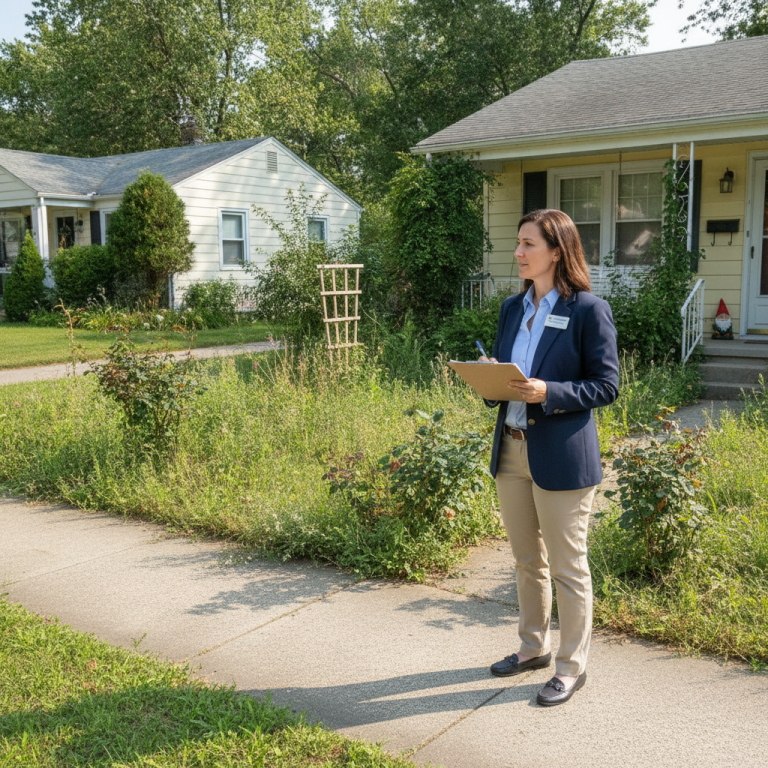
A code enforcement officer drives through a neighborhood on a July afternoon and notices a yard that’s clearly fallen behind. The grass is tall, weeds are visible, and the property stands out against the maintained homes nearby. The officer knows what comes next: a notice, a deadline, potential fines, and if nothing changes, escalation.
But there’s often a story behind that overgrown yard—one that enforcement alone won’t fix.
The reality is that the U.S. population age 65 and older has grown to 18% of the total population, and this share is projected to reach 23% by 2050. Many of these older adults live alone, want to stay in their homes, and simply cannot perform yard work due to physical limitations, financial constraints, or both. When an older adult or veteran can’t maintain their lawn, a violation notice doesn’t solve the problem—it often creates shame and hardship on top of an already difficult situation.
This is where a different approach becomes possible: connecting residents with free yard care resources before issuing fines.
Why Yard Work Isn’t Always Possible
Understanding the barriers helps code officers approach enforcement with precision, not assumption.
Physical Limitations: Age-related declines in strength, hearing, vision, and working memory compromise older adults’ ability to maintain their homes. Mowing on uneven ground, bending while raking, operating vibrating equipment, and working outdoors in heat all pose significant physical demand and injury risk. The U.S. Consumer Product Safety Commission estimates that over 90,000 emergency room visits per year are linked to lawn and garden equipment. For many older adults, yard work isn’t laziness—it’s a genuine safety concern.
Financial Constraints: Over a third of older households are cost burdened, paying more than 30% of their income for housing. For those on fixed incomes, hiring a lawn service isn’t an option. A code violation layered on top of housing insecurity creates impossible choices.
The Desire to Stay Home: 93% of adults age 65 and older prefer to remain in their own home and receive support there if they could no longer live independently. An overgrown yard shouldn’t be the reason an older adult loses the home they want to keep.
A Practical Alternative: Connect Before Enforce
Municipal code officers can become community connectors by offering a resource before or instead of issuing a violation. The approach is straightforward:
- Identify the property: When a yard falls noticeably behind, document it as usual.
- Research the resident: Is this an older adult, a veteran, someone clearly struggling with mobility or financial hardship? A quick conversation or records check can help determine if this is a compliance issue or a capability issue.
- Offer a resource: Before issuing a violation, share information about free or low-cost yard care programs. Organizations like I Want To Mow Your Lawn connect 1,800+ volunteers across all 50 states with older adults, veterans, and neighbors in need of free lawn and exterior home care relief.
- Give time to respond: A resource and a reasonable window (30–60 days) allows residents to access help rather than face immediate penalties.
- Follow up with compassion: If help isn’t accessed and violation remains, enforcement can proceed—but the resident knows you tried a different path first.
Why This Works for Everyone
This approach benefits the municipality, the resident, and the community:
- Reduces enforcement burden: Free resources solve the problem without court costs or collection efforts.
- Preserves neighborhood character: Yards get maintained through volunteers, not fines.
- Protects vulnerable residents: Older adults and veterans stay in their homes with dignity intact.
- Builds community trust: Code enforcement becomes known as a problem-solver, not just a fine issuer.
- Strengthens social fabric: Volunteer yard care connects neighbors and builds local networks.
Getting Started
Code officers who want to implement this approach can:
- Research free and low-cost yard care services available in the area (many municipalities have community service programs or nonprofit partnerships).
- Create a simple resource sheet to hand to residents when yard issues first emerge.
- Partner with local nonprofits to develop a referral system.
- Train officers to recognize situations where capability, not willingness, is the barrier.
Enforcement will always be part of code management. But when a yard reflects an older adult’s struggle rather than a choice, compassion and connection often work better than citations.
Those interested in volunteering to help maintain yards in their community can sign up to volunteer with I Want To Mow Your Lawn. Or explore the impact of yard care by playing the MOW app, available to play online or download from the App Store.
Downloadable Template